
In light of an increasing national trend to enhance food security to achieve self-sufficiency, official and societal efforts are integrating to build a cohesive production system based on agricultural and fisheries value chains, as they are the most effective pillar in linking production to markets and addressing the marketing, assembly and manufacturing gaps.
Hodeidah - Sheba - Report: Jamil Al-Qashm
In light of an increasing national trend to enhance food security to achieve self-sufficiency, official and societal efforts are integrating to build a cohesive production system based on agricultural and fisheries value chains, as they are the most effective pillar in linking production to markets and addressing the marketing, assembly and manufacturing gaps.
Hodeidah Governorate stands out with its agricultural and fisheries as one of the most important production hubs, while Amanat Al-Asimah represents the largest consumer market that embraces marketing, refrigeration and assembly operations, which makes integration between the two sides a strategic necessity and not just a temporary cooperation.
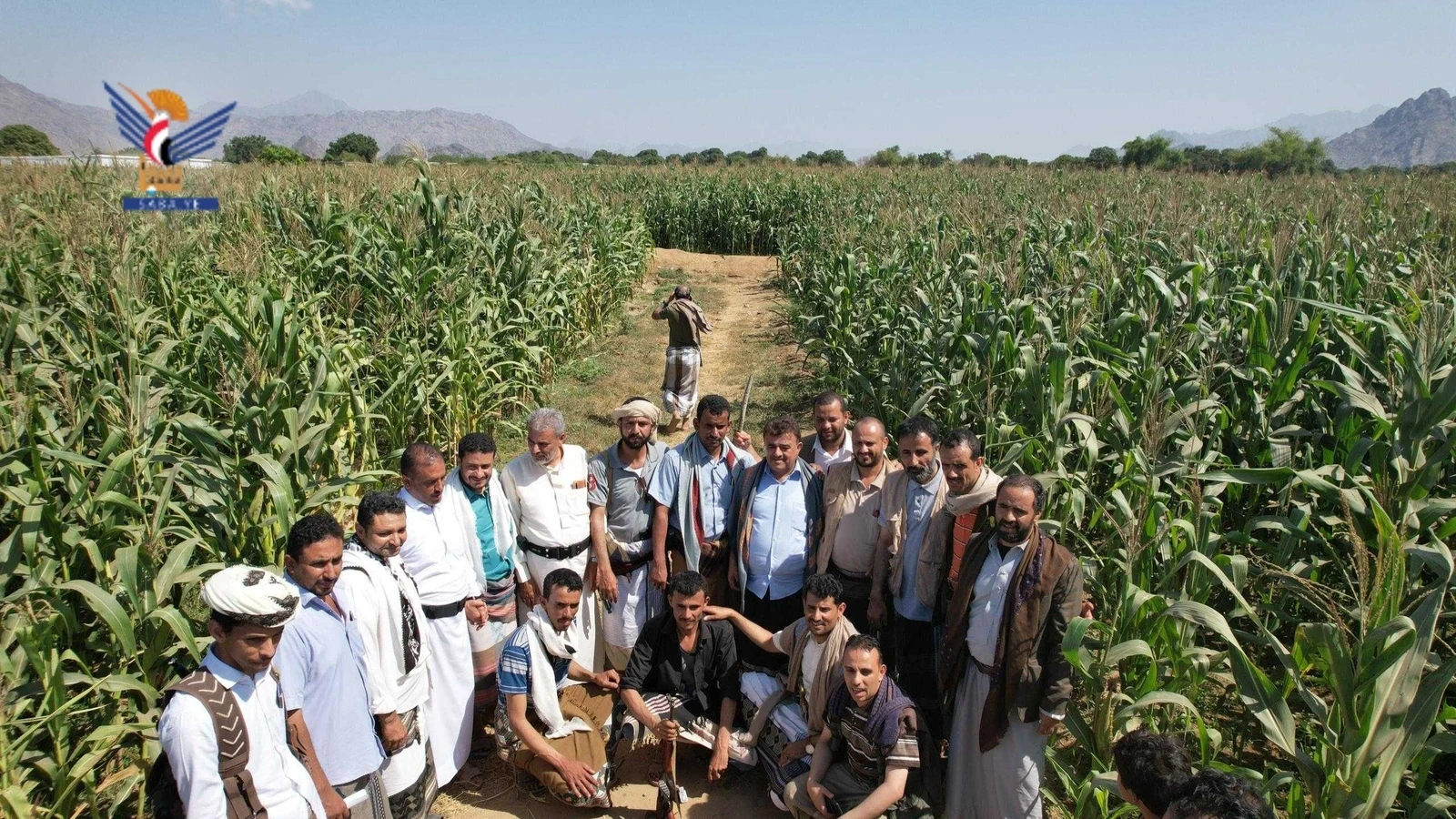
Based on this vision, during the past few days, Hodeidah Governorate witnessed intensive meetings and field visits by a development team from the capital secretariat, which included the heads of associations and the head of the Social Affairs Committee in the two localities of the secretariat, under the supervision of the Ministry of Agriculture, Fisheries and Water Resources, and in partnership with the social affairs office in the secretariat and the Bonyan Development Foundation.
The meetings formed a practical platform for exchanging experiences and learning about the field experiences of production associations, leading to consensus on joint programs that support the development of value chains and achieving integration between production areas and consumption centers.
The meetings and field visits culminated in the signing of cooperation agreements between the associations of the Capital Municipality and the Hodeidah Governorate in the agricultural and fishery fields, to complete value chains and enhance the role of the associations in supporting economic development.
The signing of the agreements came within the framework of coordination meetings and field visits by the Capital Municipality team to a number of directorates of Hodeidah Governorate, to enhance coordination between associations and activate partnership with development partners in the agricultural and fisheries sectors.
During its field visits to the targeted districts, the secretariat team was briefed on existing agricultural projects and the experiences of agricultural and fishery cooperative societies, and exchanged experiences on the field in a way that contributes to developing areas of cooperation and expanding the application of integrated value chain models.
During the meetings, which included the signing of a number of agreements, the head of the Social Affairs Committee in the two municipalities of the capital, Hamoud Al-Naqib, considered the agreements a transition in cooperative work from the level of dispersed efforts to the level of planning and joint work according to clear visions and programs, which contributes to raising the efficiency of agricultural and fish production and improving resource management.
He pointed out that the Municipality of the Capital is betting on associations as executive arms, capable of reaching producers in the field, and linking them to markets through integrated value chains, in a way that supports the trend towards achieving self-sufficiency and reducing the import bill.
While the Undersecretaries of the Ministry of Agriculture, Fisheries and Water Resources for the Plant Wealth Sector, Dr. Ibrahim Al-Saraji, the Capital Secretariat for Agricultural Sector Affairs, Muhammad Saree, and the Secretariat’s Planning Sector, Dr. Abdul Wahab Sharaf Al-Din, confirmed that the partnership between the Capital Municipality Associations and the Hodeidah Associations represents a model of integration between production areas and consumption centers, through designing joint interventions that include the stages of production, assembly, refrigeration, transportation, and marketing.
They explained that the signed agreements will contribute to unifying the technical and organizational efforts of the associations, and exchanging experiences in managing chains, revolving loans, and technical services for farmers and fish breeders, which will reflect on the quality of the products and their competitiveness in the local market.
In turn, President of the Agricultural and Fisheries Cooperative Union, Mubarak Al-Qili, explained that this step comes in the context of a broader vision for the union based on building an interconnected network of grassroots associations in various governorates, enabling them to perform their development role according to well-thought-out plans and programmes.
He pointed out that the Union works to accompany associations in the organizational, legal and technical aspects, to qualify administrative cadres, and to link associations with financing institutions and supporting partners, in translation of the directives of the revolutionary and political leadership to focus on productive development and strengthening the steadfastness of citizens.
The Governorate’s Deputy Governor for Hodeidah City District Affairs, Ali Kabari, pointed out that the coordination meetings represent a practical space for exchanging experiences between associations, unifying efforts in implementing agricultural and fishery projects, and building integrated value chains from production to marketing.
While the head of the Tihama Development Authority, Ali Hazza, and the director of the Agricultural and Fisheries Initiatives and Projects Financing Unit in the governorate, Yahya Al-Wadaei, praised the role played by the Capital Municipality in supporting efforts to achieve food security.
They urged the secretariat's associations to benefit from the experiences and successes achieved by Hodeidah's associations in a number of value chains, especially in marketing management, and organizing small producers into effective cooperative entities.
In this context, member of the Central Finance Unit, Amer Al-Hatemi, stated that the signing of the cooperation agreements that have been signed will contribute to overcoming the difficulties facing the associations in the field, and expanding the scope of benefit for fish farmers and breeders in the targeted districts, stressing the readiness of the concerned authorities in Hodeidah Governorate to provide the necessary facilities for the success of joint programs and projects.
In the meetings attended by the director of slaughterhouses in the secretariat, Ahmed Al-Idrissi, the official of the agriculture office sector, Muhammad Hajar, and the heads of associations in the secretariat of the capital and Hodeidah governorate, and directors of the directorates, the director of the agricultural and fishery projects and initiatives unit in the secretariat, Engineer Abdul-Malik Al-Ansi, reviewed the most prominent achievements in the value chains that the unit contributed to, including the establishment of associations and agricultural and fishery marketing infrastructure from central markets and collection and cooling points, considering that the secretariat of the capital is the main consumer market. For the governorates.
He stated that the unit is working to move its programs from limited interventions to building integrated models for value chains, ensuring the improvement of producers’ income and the provision of high-quality agricultural and fishery products at appropriate prices for the consumer, by linking financing to training, guidance and marketing services.
For his part, Director of the Office of Social Affairs and Labor in the Secretariat, Nasser Al-Kahli, confirmed that the associations in the Secretariat are now more prepared, from the legal, organizational and administrative aspects, to implement specific projects in partnership with government agencies and development institutions.
He pointed out the completion of correcting the conditions of a number of associations, and reactivating their supervisory and service role within local communities, pointing out that the office is working to accompany the associations in building their institutional capabilities, and enabling them to manage sustainable development projects that accommodate youth initiatives and meet the needs of the targeted neighborhoods and areas.
During visits and meetings, the Capital Secretariat team praised the cooperation of the leadership of Hodeidah Governorate, the interaction of local authorities in the targeted districts, and the creation of appropriate conditions for the success of the field landing work.
The team emphasized that the participatory spirit represents a pivotal factor in facilitating the associations’ tasks and enabling them to establish strong partnerships that serve agricultural and fisheries development in the governorate.
The meetings and visits witnessed extensive discussions on mechanisms for developing agricultural and fishery value chains, and a review of a number of association projects in Hodeidah, in addition to field tours that included agricultural projects and production farms, collection and cooling centers, and successful models of association cooperation with producers, which allowed for the exchange of experiences and identification of opportunities for integration between the two sides.
The visits and signing of agreements come in the context of a comprehensive national trend to strengthen production structures and raise the efficiency of value chains, which contributes to achieving food security, and strengthening the capabilities of associations in the governorates to work according to coherent and integrated plans from production to marketing, and in a way that supports the state’s directions to reach self-sufficiency and reduce the import gap.