
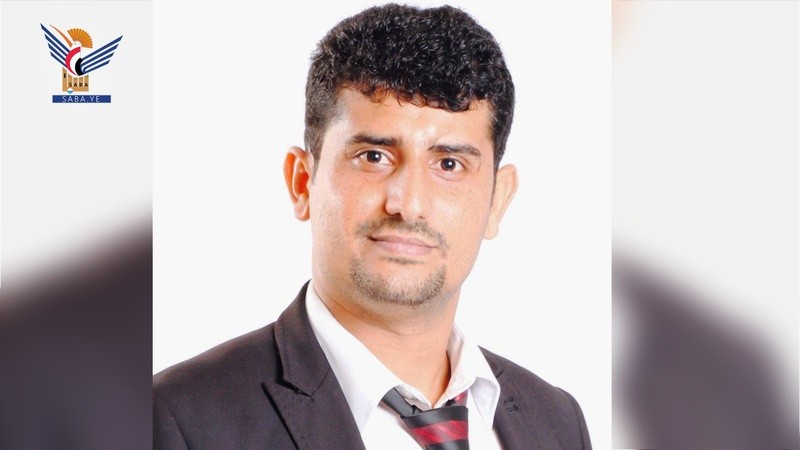
The Executive Director of the Agricultural and Fisheries Projects and Initiatives Financing Unit in the Capital Secretariat, Engineer Abdul Malik Al-Ansi, confirmed that the number of projects and initiatives funded through the local authority in the Capital Secretariat until the end of 1446 AH amounted to 63 projects and initiatives with a total cost exceeding six billion and 172 million riyals.
Sanaa - Sheba:
Interviewed by: Abdel-Wadud Al-Ghaili
The Executive Director of the Agricultural and Fisheries Projects and Initiatives Financing Unit in the Capital Secretariat, Engineer Abdul Malik Al-Ansi, confirmed that the number of projects and initiatives funded through the local authority in the Capital Secretariat until the end of 1446 AH amounted to 63 projects and initiatives with a total cost exceeding six billion and 172 million riyals, with a completion rate of 66 percent.
Al-Ansi explained in an interview with the Yemeni News Agency (Saba) that the unit adopted a comprehensive strategy for the period 2022-2030, based on the national vision for building the modern state.
He pointed out that the future of Yemen depends on its ability to rely on local production, and whoever owns his land and cultivates it has his own decision and dignity. He said, "We in the financing unit are committed to supporting every farmer, every productive family, and every young man or researcher who has an idea or project that serves agricultural and fishery development."
Below is the text of the dialogue:
Saba: Can you give an overview of the establishment of the unit?
Engineer Al-Ansi: The Unit for Financing Agricultural and Fishery Projects and Initiatives in the Municipality and the Governorates was established pursuant to Presidential Resolution No. (59) of 2021 AD, to be a direct development arm that supports the agricultural and fishery sectors in Yemen.
The establishment of the unit came at an exceptional stage that the country is going through as a result of the aggression and siege, which necessitated the presence of an effective national entity capable of leading the agricultural and fisheries transformation within the framework of the national vision for building the modern Yemeni state.
We believe that agriculture is not just an economic activity, but rather the pillar of food security and national sovereignty, and a real starting point for transforming Yemen from a country dependent on imports to a producing and exporting country.
Based on the directives of the revolutionary leadership and the Supreme Political Council, we have developed strategic plans to finance agricultural and fisheries projects and initiatives, and signed support agreements that contribute to achieving the state’s goals in the field of development and production.
Saba: What vision did the unit adopt?
The medial engineer:
The Executive Unit has adopted a clear strategic vision based on comprehensive economic and social development, based on accelerated and sustainable growth of the agricultural and fishery sectors, in order to achieve self-sufficiency, reduce poverty and unemployment, and support the success of the national agricultural strategy.
We worked to build national alliances with various official, private and community bodies to ensure sustainable agricultural development that enhances food security and preserves natural resources. We encouraged strategic partnerships and innovative financing methods, in addition to paying attention to developing human competencies to achieve operational excellence and achieve true financial sustainability.
In line with the directions of the revolutionary leadership and the Supreme Political Council, the unit adopted ambitious plans that included establishing urban cooperative societies, qualifying development knights and female development pioneers to lead the community movement, in addition to supporting economic empowerment projects for productive families, developing livestock and veterinary wealth, building rainwater harvesting facilities, in addition to promoting and marketing agricultural and fishery products.
Saba: What about the unit’s strategic goals?
The medial engineer:
Our strategic goals are broad and comprehensive, starting with enhancing community and faith awareness through awareness and development programs, and extending to raising the level of agricultural education and disseminating knowledge by financing programs and studies.
It also includes building water infrastructure by constructing ponds, barriers and dams, establishing agricultural associations and rehabilitating existing ones, and developing national partnerships to provide agricultural inputs with the highest specifications.
In addition to networking effective alliances to market and manufacture agricultural products, and protecting farms by balancing the local product with the imported one, in addition to providing advanced veterinary and extension services that support farmers and livestock breeders.
Saba: What is the future strategy until 2030?
The medial engineer:
The unit adopted a comprehensive strategy for the period 2022-2030 AD, based on the national vision for building a modern state. The strategy aims to update development goals in a way that enhances the agricultural sector’s contribution to the local product, ensures the sustainability of the economic and social impact, raises the rate of local production, develops value chains, improves marketing and agricultural services, and introduces modern and diverse financing methods.
It also aims to invest in human capital to achieve institutional excellence, encourage modern technologies and sustainable practices to preserve natural resources, build partnerships with cooperative societies, the private sector, and research centers, and support innovators and researchers in projects to develop modern technologies to reduce the cost and improve the quality of agricultural and fishery products.
Financial sustainability has been placed at the core of our strategy by improving operational efficiency, enhancing local content, and increasing spending efficiency.
Saba: What has been achieved in terms of institutional and administrative construction?
The medial engineer:
Within a short period, we were able to take positive steps in institutional and administrative building by implementing a comprehensive administrative reform plan targeting development partners.
We launched specific projects in the field of water security, and supported agricultural and veterinary education by expanding the colleges of agriculture and veterinary medicine at Sana’a University, rehabilitating the veterinary hospital and slaughterhouses, and establishing and improving agricultural nurseries.
We also worked to support researchers and innovators in agricultural and fishery technologies, and we gave great importance to the media and awareness aspect to enhance the culture of local consumption, reduce the import bill, and open the horizons of reverse migration towards the countryside in order to restore agriculture as a main source of livelihood and production.
Sheba: What are the most notable achievements achieved during the period 1444-1446 AH?
The medial engineer:
During this period, the unit achieved tangible achievements in the fields of agricultural and fisheries development, the most notable of which was in urban community building, where we established eight cooperative societies in the districts of the capital secretariat, with plans to announce additional societies. We also implemented more than 473 community initiatives that included awareness, economic empowerment, and the establishment of markets for productive families.
In the field of capacity building, we trained 349 local authority leaders and 53 women leaders, trained 643 development knights and 203 female pioneers, and implemented 310 awareness sessions for men and 114 sessions for women.
In the field of economic empowerment and within value chains, the capabilities of 40 trainees were built in craft manufacturing in the field of leather industries within the leather value chain. In the dairy value chain, capabilities were built to improve the quality and efficiency of the dairy production chain by empowering training centers and supporting production laboratories in a way that enhances local production. In ten associations, and within the clothing value chain of cotton industries, the capabilities and skills of one hundred seamstresses were built on the techniques of designing and producing children’s cotton and men’s clothing in the districts of Ma’in, Bani al-Harith and al-Thawra, and work is still underway for other activities according to Important paths that enhance the achievement of self-sufficiency for some products.
The unit also achieved achievement in the field of marketing and promotion by holding festivals for agricultural products (pomegranate, mango, honey, apples, dates, and the Eid festival), which in turn works to market and promote agricultural products in addition to completing a project to create “fixed and digital” billboards to market and promote agricultural products in a number of appropriate locations in the municipality to deliver marketing messages for agricultural products to the largest segment of society towards supporting agricultural marketing in the capital Amanat.
In the field of livestock, the unit worked to finance projects to rehabilitate central slaughterhouses, modernize equipment, and develop their infrastructure to improve the quality of meat products, ensure the safety of the production process, and contribute to providing healthy food to the community and improving food security.
It completed the project to rehabilitate and restore the slaughterhouse in Nuqm and the project to rehabilitate the slaughterhouse in the central slaughterhouse in Dar Salam. It is in the process of supplying and purchasing equipment for the slaughterhouse in the slaughterhouse. Slaughterhouse equipment was supplied and the slaughterhouse was supplied with equipment, the most important of which is the “slaughterhouse,” which slaughters 60 heads of cows per hour. Thus, the gaps in the value chain in livestock were completed.
We are also in the process of implementing a project to rehabilitate the feed factory in the slaughterhouse, as it is the only factory in Yemen to produce feed from slaughterhouse waste and contribute to the completion of the chain. In addition, the rehabilitation and re-operation of the crusher and ovens sections has been completed, and we are in the process of completing the rest of the components of the factory. Currently, a public tender has been launched for the treatment plant project for wastewater and slaughterhouse waste in the slaughterhouse and the supply of the necessary machinery and vehicles for the station, which is considered the last project in the value chain and aims to treat the waste of the central slaughterhouse. Eliminating odors resulting from slaughter waste, producing fertilizer suitable for agriculture, etc.
In addition to completing projects to expand the absorptive capacity and improve teaching methods for the College of Veterinary Medicine and the College of Agriculture by building and furnishing classrooms to ensure a suitable educational environment, in addition to rehabilitating the veterinary hospital and maintaining its equipment to contribute to preserving livestock and helping to implement research related to their development and protection from diseases, epidemics and pests.
We also worked on refurnishing the veterinary hospital, maintaining and operating its equipment, and providing the necessary tools and materials for operation. In addition to training the staff in the field of water resources development, the unit worked on digging, deepening, and cleaning rainwater basins to accommodate and store rainwater to benefit from it in groundwater recharge, with the completion of four projects in this field, and there is one project in the process of implementation for the basin as the end of the series.
While the unit paid attention to developing agricultural nurseries, maintaining their water pumps, providing improvement to their infrastructure, purchasing the necessary equipment to enhance plant productivity, providing high-quality seeds and seedlings, and supporting the fish sector in the capital secretariat.
In this regard, the unit worked to finance and implement a project to promote fish marketing in the capital secretariat by establishing and installing 27 fish sales points in various locations in the capital secretariat.
The project aims to facilitate the access of high-quality fish products to all segments of society, enhance fish marketing, create new job opportunities, and help improve income, in addition to completing a number of projects in the field of administrative reform, institutional building, and human resources development to activate development partners.
In addition to other activities in progress, they represent part of an urban community building process and are based on partnership agreements with the Bonyan Development Foundation. Among these activities are the training and qualification of 300 local authority leaders and cadres, 150 active community figures, 110 in the field of research, food manufacturing and animal health, 70 male and female trainees in executive management and loan officers, and 40 marketing trainees.
In addition to training 2,048 knights and pioneers of development knights and pioneers, implementing 988 workshops for neighborhood elders and neighborhood sheikhs, and 844 special sessions for recommending development knights and other projects in other fields under implementation.
Saba: How do you evaluate the unit’s overall performance in numbers?
The medial engineer:
Until the end of the year 1446 AH, the number of projects and initiatives funded through the local authority in the Capital Secretariat reached 63 projects and initiatives with a total cost exceeding six billion and 172 million riyals, with a completion rate of 66 percent. These numbers reflect the seriousness of the unit in achieving its goals and providing an effective institutional model that keeps pace with the aspirations of the national leadership.
The projects varied between community building, economic empowerment, marketing and services, livestock, water resources, fisheries, extension and media, and the plant sector, in addition to projects in institutional building to activate development partners, administrative reform, and emergency funding.
Saba: How do you see the future of Yemen in light of these efforts?
The medial engineer:
The future of Yemen depends on its ability to rely on local production, and whoever owns his land and cultivates it has his own decision and dignity. We in the Finance Unit are committed to supporting every farmer, every productive family, and every young man or researcher who has an idea or project that serves agricultural and fisheries development.
We are firmly convinced that Yemen is capable of reaching the stage of self-sufficiency and transforming into a country that produces and exports agricultural and fisheries resources, provided that the efforts of the leadership, people, and institutions come together in one path.
Thanks to everyone's commitment to the directives of the revolutionary leadership and the directives of Mr. Leader, we are moving forward with confident steps towards a prosperous future, achieving many achievements and restoring Yemen to its position as a strong and independent country.